
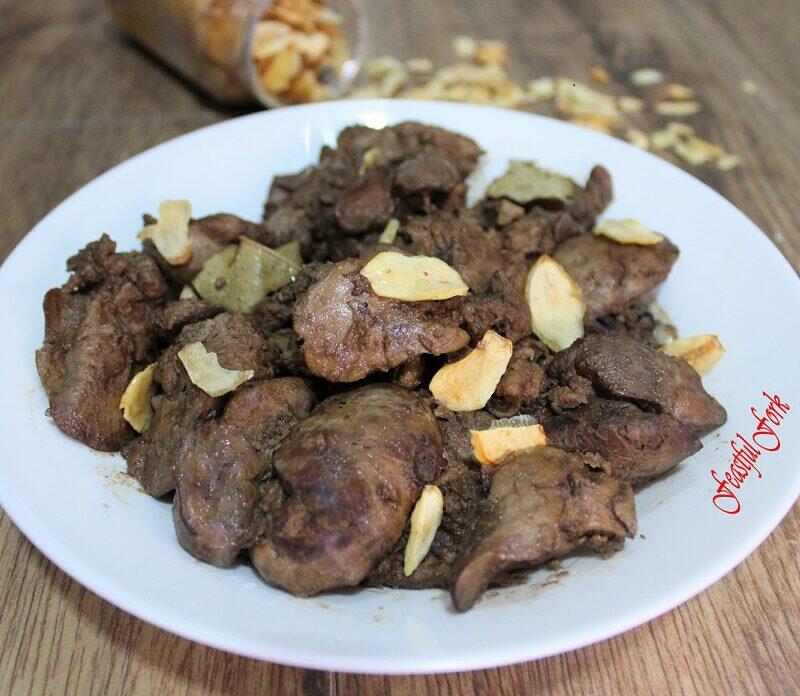
Chicken Liver Adobo
Chicken liver may not be the first ingredient that comes to mind when you think of Filipino adobo, but for many Filipinos, adobong atay ng manok is a familiar and much-loved dish.
It is not surprising that adobo is one of the most popular ways to cook chicken liver in the Philippines. Chicken adobo is perhaps the most familiar version of this classic Filipino dish, but the same combination of vinegar, soy sauce, garlic, and pepper can be used with many different meats and even vegetables.
In this recipe, chicken liver takes center stage.
Chicken liver is relatively inexpensive and nutrient-dense, but its strong smell and distinctive metallic taste can be off-putting if you are not accustomed to eating liver. This is where adobo comes in. The vinegar helps tame the strong liver aroma while adding the unmistakable tang that makes Filipino adobo so delicious.
And because the liver is cooked in a strongly flavored adobo sauce, there is no need to soak the chicken liver in milk before cooking it.
That is one less preparation step—and one less bowl to wash.
What Is Chicken Liver Adobo?
Chicken liver adobo, locally called adobong atay ng manok, is a Filipino dish made by cooking chicken livers with vinegar, soy sauce, garlic, and black pepper.
Like many Filipino dishes, there is no single way to make it. Some cooks add onions, bay leaves, sugar, ginger, or chili peppers, while others keep the ingredient list very simple.
My mother’s version is on the simpler side. She does not use bay leaves, and onions are optional. I have followed her method for years, with a few observations of my own from trying different versions of chicken liver adobo.
The result is tender chicken liver with concentrated adobo flavor and slightly crisp edges.
Why Cook Chicken Liver as Adobo?
If you find the smell of chicken liver particularly strong, or you dislike its metallic taste, adobo is one of the Filipino recipes I would recommend trying.
The vinegar does more than provide the characteristic tang of adobo. It also helps mellow the strong aroma of the liver. As the liquid cooks down, the vinegar, soy sauce, garlic, and pepper become concentrated, giving the chicken liver a much more complex flavor.
Of course, liver lovers may disagree with me. Some people enjoy that unmistakable liver taste and smell, and there is absolutely nothing wrong with that.
But if you are eating liver because you enjoy its nutritional value and are looking for a more approachable way to prepare it, chicken liver adobo is worth trying.
And no, you do not have to soak the liver in milk first.
Ingredients for the Filipino Chicken Liver Adobo
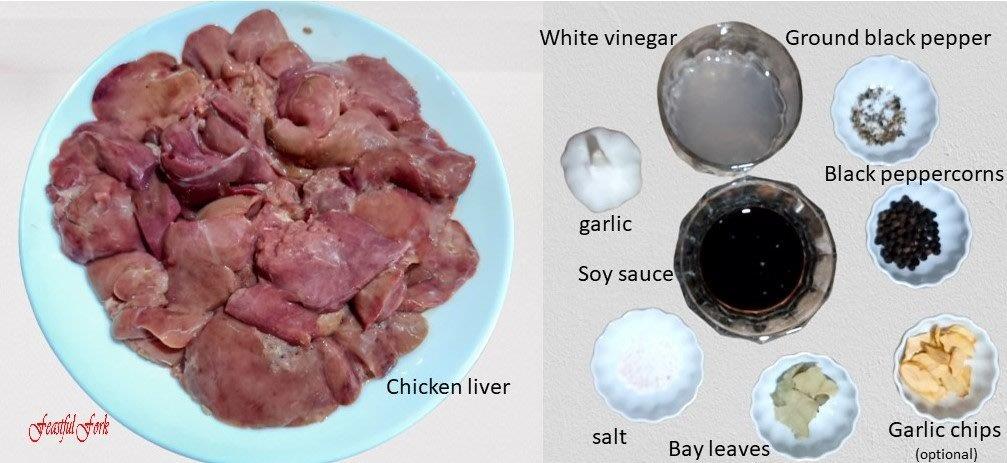
- Chicken liver
- Head of garlic, minced and divided
- Onion (optional)
- Whole black pepper corns
- Salt
- Dark soy sauce
- White or brown sugar
- White vinegar or palm vinegar
- Patis (fish sauce)
- Bay leaves (optional)
- Green serrano chilis (optional)
- Cooking Oil
- Green onions (toppings)
- Crispy garlic bits or slices as toppings
The exact amounts are included in the recipe card below.
Do You Need Onion in Chicken Liver Adobo?
This is one of those questions where my answer is: it depends on the kind of adobo you like.
My mother does not normally use onions in her adobo. Onions release quite a bit of moisture as they cook, and that can make the finished dish wetter than I prefer.
If you like a juicier version, however, you can add a small amount of finely diced onion. I use only about a tablespoon per kilo of chicken liver.
The idea is not to have the onion become a noticeable part of the dish. It simply adds moisture and flavor while the liver cooks.
If you do use onion, cook it until it is almost brown before adding the liver. Undercooked onion can change the flavor of the finished adobo.
How to Cook Chicken Liver Adobo
I have seen and tried different ways of cooking chicken liver adobo through the years. The differences are usually minor, but I want to share the method my mother used whenever she cooked it.
1. Wash and drain the chicken liver.
Clean the chicken liver and drain it well. Pat the pieces dry with paper towels if necessary.
Removing excess water helps prevent the finished dish from becoming unnecessarily watery.
2. Pre-cook the chicken liver with vinegar and garlic.
Put the chicken liver in a pot. Add the vinegar, whole black peppercorns, and half of the minced garlic.
Simmer over medium heat for about five minutes, or until the liver is partially cooked.
Set the liver aside, but do not immediately discard the liquid.
Some of that concentrated cooking liquid can be used later in the adobo.
3. Sauté the remaining garlic.
Heat cooking oil in a separate pan.
Add the remaining minced garlic and stir for no more than a minute.
The garlic only needs to soften. You do not want to wait for it to become golden brown at this stage because those tiny pieces can go from perfectly cooked to burned in seconds.
Trust me on this one. I’ve learned it the hard way.
4. Add the onion, if using.
If you are using onion, add it to the garlic and cook until almost brown.
Remember that the onion is optional. My mother does not use it in her adobo, and neither do I most of the time.
5. Add the chicken liver.
Add the partially cooked chicken liver to the pan, leaving the cooking liquid aside for now.
Stir and cook until the remaining liquid has evaporated.
Add the soy sauce and stir to coat the liver.
6. Add the bay leaves and chilies, if using.
Add bay leaves and green serrano chilies, if desired.
My mother and I don’t use bay leaves in our adobo. There is no particular reason except that, to us, the flavor of bay leaves changes the taste of what we consider a more traditional Filipino adobo.
But this is entirely a matter of preference.
The chilies are also optional. They are not there to create the characteristic adobo flavor; they simply add a little heat.
Interestingly, I have found that more Filipinos than I expected do not like chili heat. I have several close friends who prefer no chili at all in any of their dishes.
So, if you are one of them, simply leave the chilies out.
7. Season carefully.
Add salt and ground black pepper to taste.
Go easy on the salt. The soy sauce, vinegar, and fish sauce will already contribute plenty of savory flavor.
8. Add the cooking liquid, vinegar, and fish sauce.
Add about two tablespoons of the liquid from pre-cooking the chicken liver.
Alternatively, you can discard that liquid and add about two tablespoons of vinegar and one tablespoon of fish sauce.
Do not stir immediately. Allow the mixture to come to a boil over medium heat.
9. Add the sugar.
Add the brown sugar and stir once.
Reduce the heat to medium-low and allow the adobo to simmer until most of the liquid has evaporated, about five minutes.
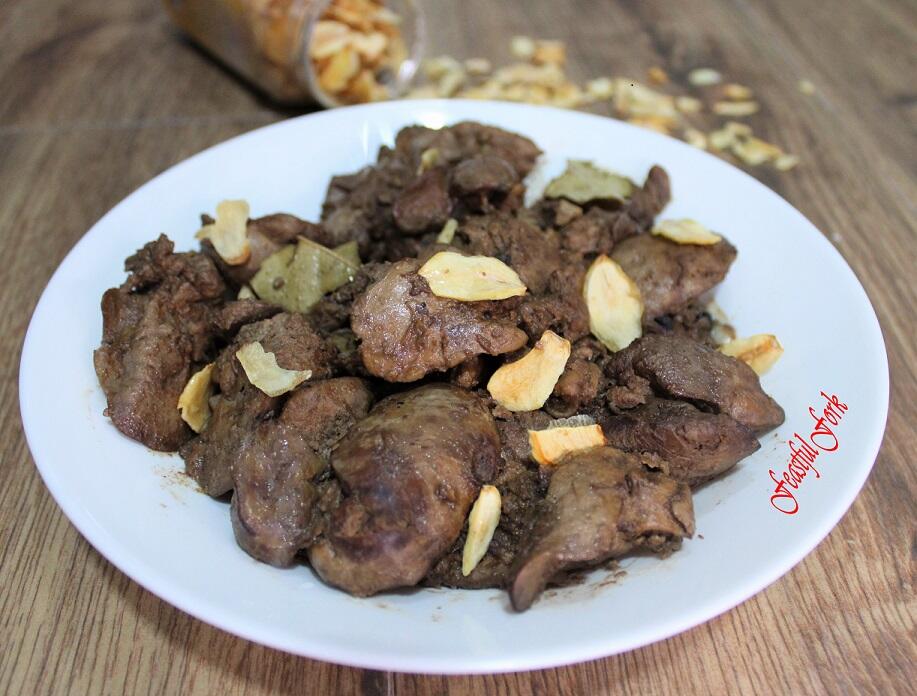
This is where I look for my favorite stage of chicken liver adobo: the liver should have slightly crisp edges while remaining plump in the middle.
That is when I know it is ready.
10. Add the toppings.
Transfer the chicken liver adobo to a serving dish and top with crispy garlic slices or chopped green onions.
11. Serve.
Chicken liver adobo is best served with steamed rice or fried rice, particularly egg-fried rice.
Why is There No Water in Chicken Liver Adobo?
You may have noticed that water is not included in the main ingredient list.
Is that intentional?
Yes.
But adding water to chicken liver adobo is not wrong. It is simply a matter of how wet or dry you prefer your adobo.
If you are cooking about a kilo of chicken liver and are concerned that the dish might become too dry, you can add approximately half a cup of water.
However, I suggest trying this recipe without adding water first.
The chicken liver releases liquid as it cooks, and that liquid is already full of flavor. By allowing it to reduce rather than diluting it with water, you get a more concentrated adobo flavor.
So don’t panic when you see the liquid disappearing from the pan. That is exactly what you want.
Serving Suggestions for Chicken Liver Adobo
This Filipino recipe for chicken liver can be served for breakfast, lunch, or dinner.
Chicken liver adobo can be served for breakfast, lunch, or dinner.
The most traditional pairing is, of course, steamed white rice. It is also excellent with fried rice, especially egg-fried rice.
And here’s one of my family’s less traditional suggestions: try it with pita bread.
My kids loved chicken liver adobo with white rice, while Mr. Green Eyes preferred eating it for breakfast with pita bread.
Because the adobo itself does not contain vegetables, I like serving it with a simple vegetable side dish. Steamed green beans, carrots, zucchini, and cauliflower all work well.
The vegetables also provide a nice contrast to the savory, strongly flavored liver.
Cooking Tips for Chicken Liver Adobo Recipe
Here are a few things I have learned from making adobo through the years.
- Cook onions thoroughly if you use them. Almost-browned onions add a much better flavor than undercooked onions.
- Try adding ginger. A slice or two of fresh ginger, or about a tablespoon of julienned ginger, works beautifully with chicken liver.
- Sugar is optional. A little sugar balances the tang of the vinegar. My mother prefers her adobo without sugar, while I don’t mind a hint of sweetness.
- Choose your vinegar carefully. Palm vinegar is my first choice for adobo, followed by white vinegar. Apple cider vinegar gives a different result and is not my preferred choice here.
- You can add other chicken giblets. Chicken gizzard and chicken hearts can be cooked along with the liver. The combination gives the dish a slightly different texture and flavor.
- Don’t forget the garlic. Crispy fried or baked garlic slices make an excellent topping for chicken liver adobo.
- Don’t overcook the liver. Chicken liver can become dry and grainy if cooked for too long. The goal is for the outside to become slightly crisp while the inside remains moist.
Can You Add Chicken Gizzard and Hearts?
Absolutely.
Chicken liver adobo can easily become a combination of chicken liver, gizzard, and hearts.
The gizzard adds a firmer, chewier texture, while the hearts have a texture somewhere between liver and other dark chicken meat.
If you enjoy Filipino lamang-loob (organ meats), this combination is particularly good served over hot steamed rice.
How to Store Chicken Liver Adobo
Transfer leftover chicken liver adobo to a clean, airtight container and refrigerate.
For best quality, I recommend eating it within a few days rather than relying on the vinegar alone as a preservative. The presence of vinegar does not make a cooked meat dish safe to keep refrigerated indefinitely.
When reheating, heat the leftovers thoroughly until hot throughout.
If you are reheating a large amount, you can use the oven at about 300°F (150°C) until heated through. For a small serving, the microwave is more convenient.
Frequently Asked Questions About Chicken Liver Adobo
Do you need to soak chicken liver in milk before making adobo?
No. I don’t soak chicken liver in milk for this recipe. The vinegar-based adobo cooking method helps mellow the strong aroma of the liver while adding the characteristic tangy flavor of adobo.
Why is my chicken liver adobo dry?
Chicken liver can become dry if it is cooked for too long or if too much liquid is allowed to evaporate. If you prefer a juicier adobo, you can add a small amount of water during cooking.
Can I make chicken liver adobo without sugar?
Yes. Sugar is optional. It adds a touch of sweetness that balances the acidity of the vinegar, but my mother prefers her adobo without sugar.
Can I add onions to chicken liver adobo?
Yes. Onions are optional. They add moisture and flavor, but my mother and I usually leave them out because we prefer a drier adobo.
What vinegar is best for chicken liver adobo?
Palm vinegar is my preferred choice, followed by white vinegar. Different vinegars produce slightly different flavors, so you can experiment to find the one you like best.
What do you serve with chicken liver adobo?
Chicken liver adobo is traditionally excellent with steamed white rice. You can also serve it with fried rice, vegetables, or even pita bread.
More Filipino Chicken Liver Recipes
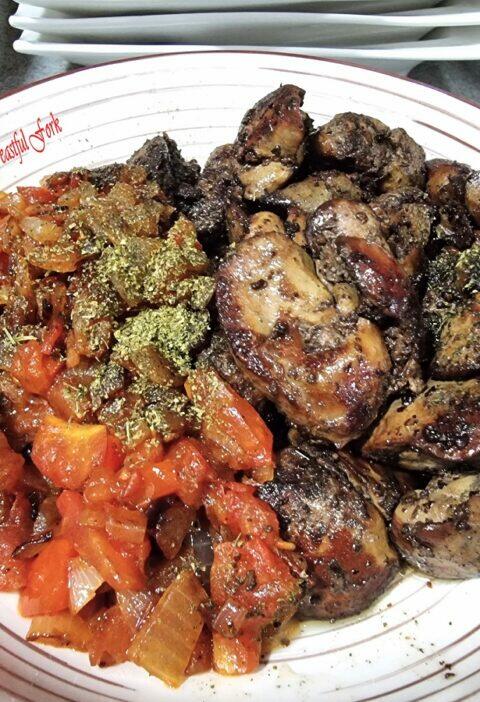
If you enjoy chicken liver but want to try it prepared differently, take a look at my Chicken Liver with Onions and Tomatoes.
It is a completely different flavor profile from adobo, but another delicious way to cook chicken liver.
PrintThe Filipino Recipe for Chicken Liver Adobo
Tender chicken liver simmered adobo‑style in soy, vinegar, and garlic—bold, savory, and ready in minutes for a classic Filipino dish.
- Prep Time: 20 minutes
- Cook Time: 20 minutes
- Total Time: 40 minutes
- Category: Main dish
- Method: cooking
- Cuisine: Filipino
Ingredients
- 1 kilo chicken liver, cleaned and washed
- 1/2 cup palm vinegar
- 1 head of garlic, minced and divided
- 1 medium onion (optional)
- 1 tbsp black pepper corns
- salt and ground black pepper, to taste
- 1/4 cup dark soy sauce
- 1 tbsp brown sugar
- 1 tsp patis (fish sauce) – optional
- 3–4 bay leaves (optional)
- 1–2 green chilis (optional)
- green onions (toppings)
- crunchy garlic bits or slices (toppings)
Instructions
- Dry chicken liver with paper towels to help ensure that the dish does not end up watery.
- Put the livers in a pot. Add half a cup of vinegar, a tablespoon of whole pepper, and minced garlic and simmer slowly over medium heat for about 5 minutes or until the livers are half-cooked. Set aside.
- Heat cooking oil in a separate pan. Add the remaining garlic and stir for no more than a minute or when the tiny garlic pieces are limped.
- Add onions, if using, and stir until the onions become translucent.
- Scoop the chicken liver from the pot, then add to the sauteed garlic and onions, and stir repeatedly until the livers are seared. Stir and cook until all the juices are gone. Add soy sauce and stir again.
- Add bay leaves and chilis – if using – and stir twice.
- Season with salt and ground black pepper. Use salt sparingly, you might find that the soy sauce and vinegar combination has given the dish enough salt.
- Add two tablespoons of the juice from pre-boiling the chicken liver. Alternatively, ditch that juice, and add two tablespoons of vinegar and a tablespoon of fish sauce to the pot. Do not stir until it boils. Maintain on medium heat.
- Add sugar and stir once. Simmer over medium-low heat until most of the juices evaporate, about five minutes.
- Serve with crunchy garlic slices or sliced green onions as toppings. Best served over steamed rice or alongside egg-fried rice and enjoy this appetizing dish.

Love pork-free family recipes?
Download my FREE Pork-Free Filipino Favorites Cookbook Bundle, plus two bonus recipe collections.
Free recipes. No spam. Unsubscribe anytime.
[…] familiar with adobo, that is why you are here. I also feel that your interest is ticked by another Filipino adobo recipe that calls for chicken liver. You are in the right place. Locally called adobong atay ng manok in […]
[…] will allow the flavors to penetrate deeper into the meat. How to serve roasted rosemary chicken. How to Cook Chicken Liver Adobo – Feastful Fork. Chicken Liver Adobo I have a feeling that you are familiar with adobo, that is why you are here. I […]